{item_alt_tag}

16 October 2026


GCSE Classics and Latin Trip

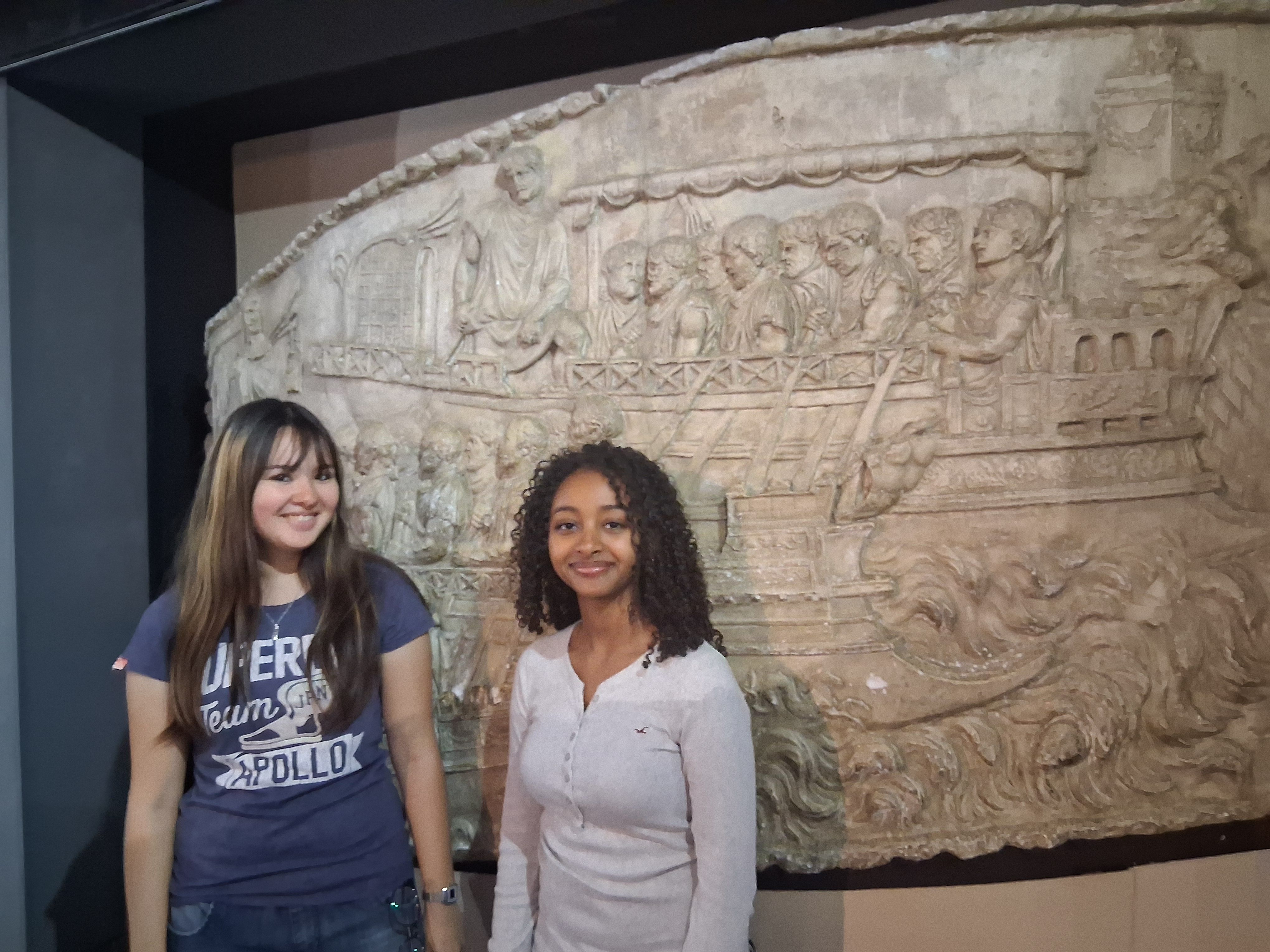
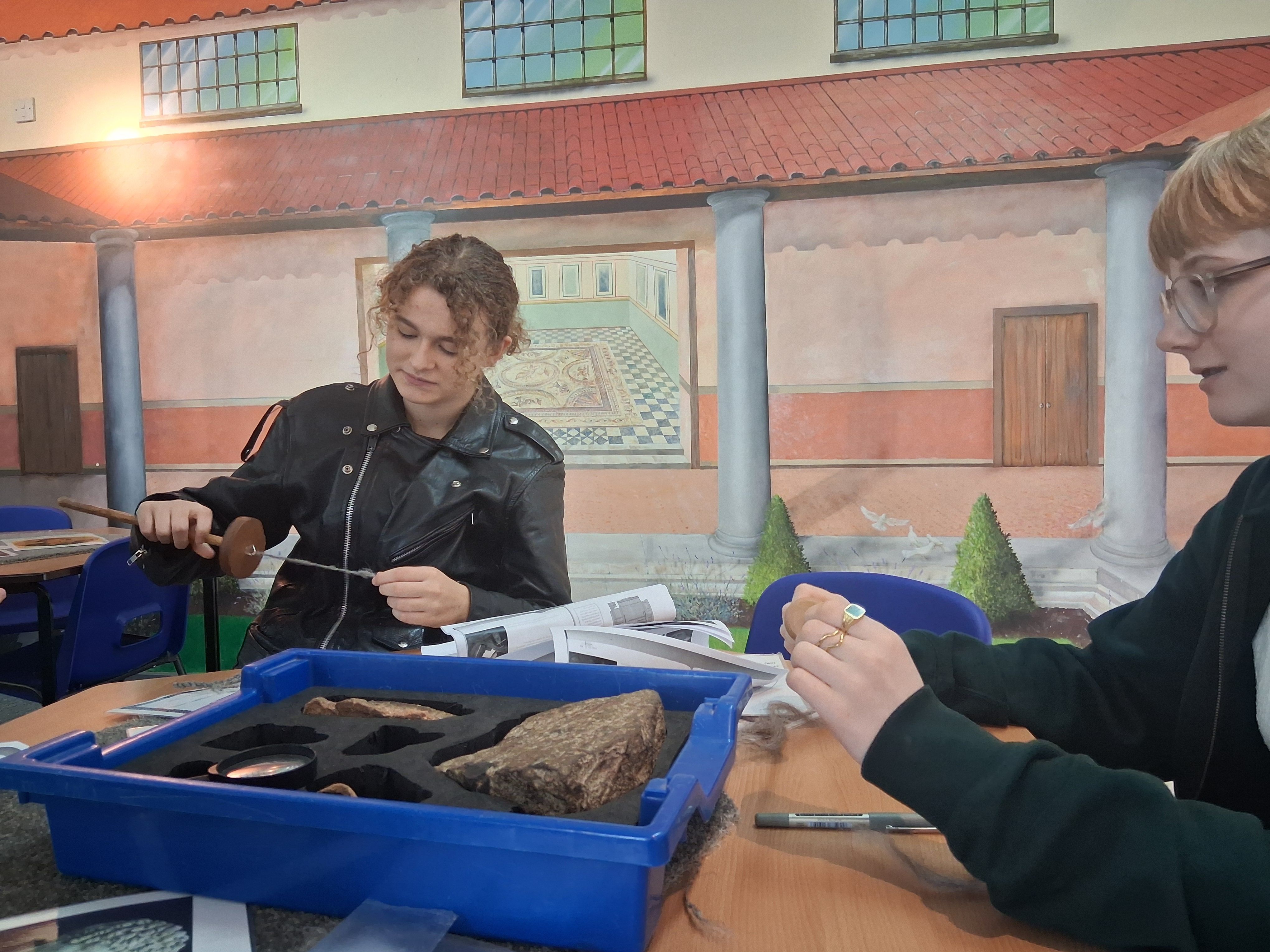
On Wednesday, the GCSE Classics and Latin classes visited Fishbourne Roman Palace in West Sussex. This was one of the largest domestic residences north of the Alps in Roman times, and the palace of King Togidubnus, who the Y10 and Y11 Latin students read about on the Cambridge Latin course. It has some of the best mosaics preserved in situ in the country, as well as a fantastic museum. Despite all this, there are no Roman literary sources about the palace, so what we know has been learnt through archaeology, as the students discovered.

As well as seeing all this, students took part in bespoke workshops tailored to their courses, investigating Roman life, and particularly the lives and experiences of Roman women. Students were able to handle real Roman artefacts, discover Roman and Romano-British clothing (and dress up!) and have a go for themselves at spinning real sheep's wool into woollen thread. This gave them hands on experience of one of the most important jobs of Roman women, and students discovered just how hard and how long it would take to spin enough thread to make even a simple tunic. It must be said, empathy for the position of Roman women certainly increased on this wonderful trip!

{item_alt_tag}
{item_alt_tag}

The Classics department would like to commend every student for their enthusiastic attitude throughout the visit. It was a real pleasure to accompany them to this impressive site!

Mr Deary, Ms Maguire and Mr Beecroft


Music Workshop

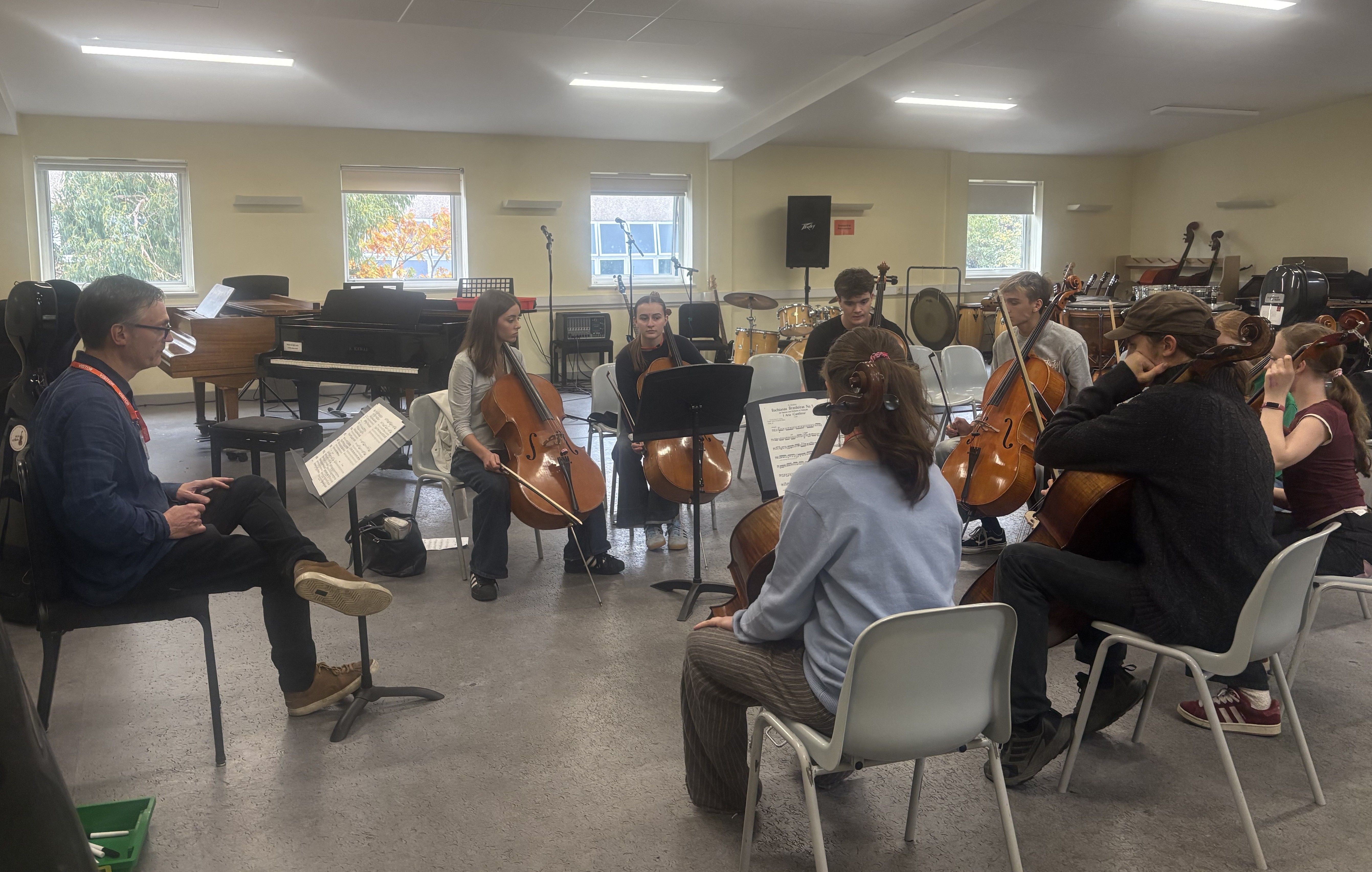
What could be better than 8 wonderful young cellists playing together? Last Friday the celebrated cellist, Adrian Bradbury, came into CSG to work with one of our Chamber Ensembles on Villa Lobos’s Bachianas Brasileires. They will be performing this evocative piece with soprano soloist, Madeline Bradbury, at our Winter Concert on 1st December at 6pm in the Main Hall. This will be heard alongside all our other ensembles, including our Symphony Orchestra playing the beloved Bruch Violin Concerto with year 12 Jessica Keenlyside as soloist and our Junior and Senior Choirs and Jazz Bands.

{item_alt_tag}

Maths Student of the Week

Juliette 9M – for always contributing so positively and enthusiastically with astute observations every single Maths lesson. Well done and keep it up!


{item_alt_tag}

Autumn 2026 Programme


What We're Reading 

The Penelopiad by Margaret Atwood

The Penelopiad is a re-telling of the famous Greek story the Odyssey, in which the famous hero Odysseus takes years to return home, while his faithful wife Penelope waits and fends off over a hundred suitors. In the Penelopiad, Atwood turns the story on its head and tells the story from not only the perspective of Penelope, but also the often forgotten 12 maids who are brutally killed by Odysseus. This feminist retelling depicts Penelope in the underworld describing her life and reflections to us, and the book explores themes of gender, justice and class that were issues in classical Greece, as they are today.   

Zoe 9M


{item_alt_tag}

Assembly Speaker – 12 October 
Deborah Tabi: Founder of The Young Minds Campaign

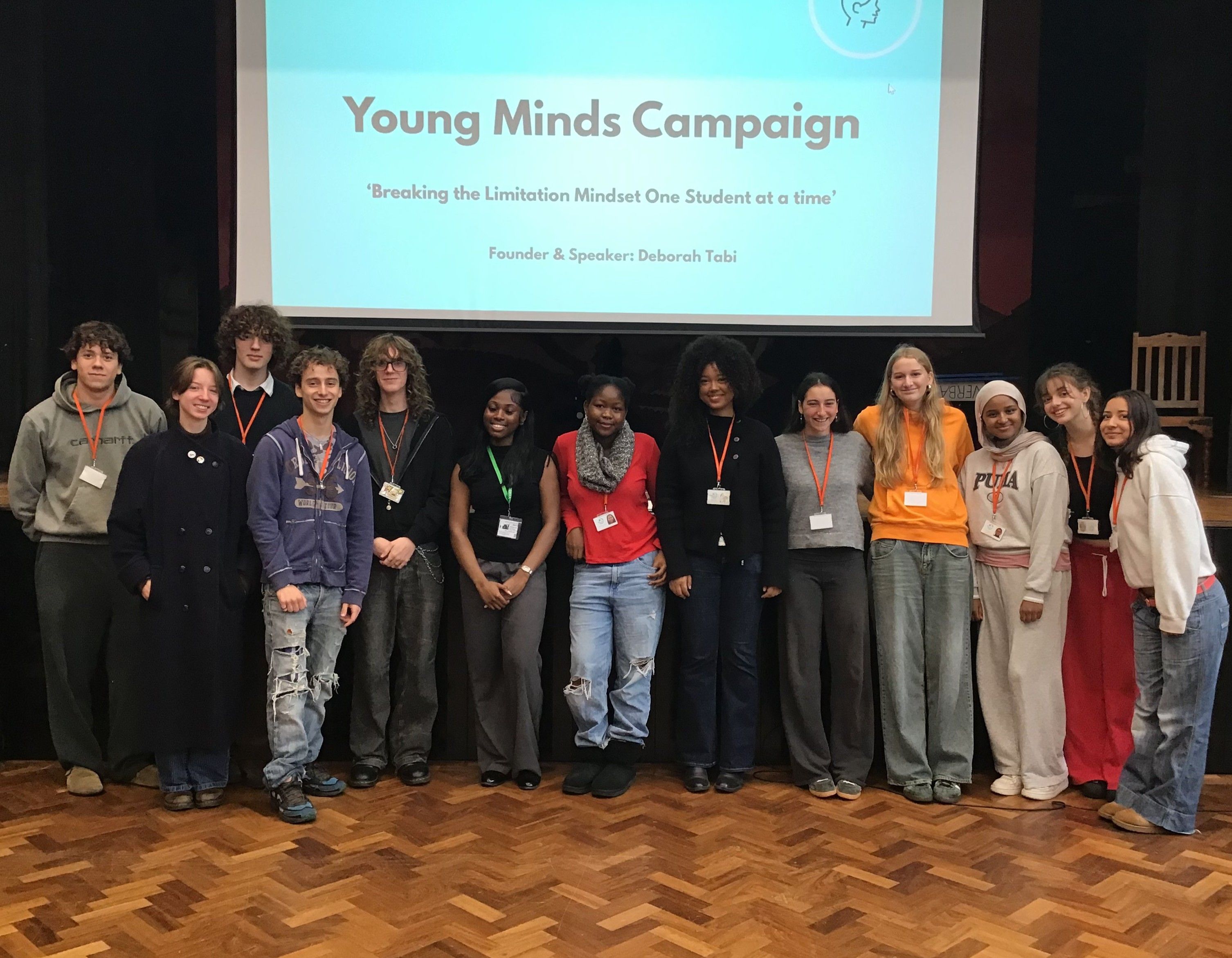
In our assembly on Monday, Deborah Tabi came to talk to us about the Young Minds Campaign – an organisation dedicated to inspiring young people from disadvantaged backgrounds to look beyond the limitations of their circumstances and envision a brighter future, which she is the founder of. She delivered an inspiring talk to sixth formers about how we can make our hopes and ambitions become a reality.

Deborah Tabi began by talking to us about her own backstory. She’s a Ghanaian Christian who grew up in an overcrowded and dangerous area of London, surrounded by crime. This meant she experienced limitations in her youth, which she overcame upon receiving a scholarship to Warwick University to study law. Deborah then worked in asset management and wealth management before launching the Young Minds Campaign, which was born from her own lived experience.

We then heard about the limitation mindset and how we can break it. The dangers of the limitation mindset include missing opportunities, unfulfilling our potential and having regrets in later life. However, by breaking this mindset, we can live out our leadership potential by taking the first step towards something and letting others follow behind you. We can also reshape our minds and mindsets for a more positive and ambitious attitude to our futures. To  achieve this, you must have a mentality shift; realising that help is available is the first step towards this and telling yourself you can do it and believing in yourself is so important in this. You can be the first and the new standard, and you don’t need to have all the answers when tackling a new challenge.

 

{item_alt_tag}

Another key concept to have is the power of vision and making that vision a reality. We must ask ourselves simple questions like where do I want to live? What do I want to drive? What difference do I want to make? What community do I want to be a part of? What do I want to give back to my old community, etc. The way to make these visions a reality can be done by writing them down and keeping them in sight by setting daily, weekly and monthly goals, evoking consistent and daily action. You can also condition your environment by deciding who you would like to surround yourself with and what opportunities that can give you. Making declarations can only result in positive actions.

My key takeaway from the assembly was that at the end of it, you’ll regret the things you don't do rather than the things you do, so it’s important to take those risks, because your future self will thank you for doing it now.

If you want to check out the Young Minds Campaign, you can find them on LinkedIn for regular updates on what the organisation is currently doing. Reaching out to them was strongly encouraged!

Lilly
Sixth Form Prefect


Weekly Wellbeing Section

Working on Wellbeing

As the days get shorter and the weather changes, we know that people's mood can shift a bit downwards.  Therefore, continuing with our previous theme this week we are encouraging you to keep making a small, intentional effort to get outside during daylight hours — even if it’s just a 10-minute walk at lunchtime (even on a cloudy day) where you look up and forward (not at a phone).  We also encourage you to notice one thing you appreciate about the changing season — the colours of the leaves, the crisp air or the quieter pace of an autumn afternoon.

Research into positive psychology and wellbeing suggests that our environment can influence how we feel. A 2025 systematic review and meta-analysis found a small-to-moderate positive association between light exposure and wellbeing, although the effects vary between individuals and contexts. As we move into the darker months, making time for natural daylight and noticing the small pleasures of the season can be a simple way to support our wellbeing.

Read more: The Effect of Light on Wellbeing: A Systematic Review and Meta-analysis (Landvreugd, Nivard & Bartels, 2025)

Ms Hacker


{item_alt_tag}

{item_alt_tag}